An Expat’s Guide to Private Markets: Turning a Gulf Salary into Lasting Wealth
Don't invest unless you're prepared to lose all the money you invest. This is a high-risk investment and you're unlikely to be protected if something goes wrong. Take 2 mins to see our risk warning.
Zain Karbani
Investment Manager
June 4, 2026
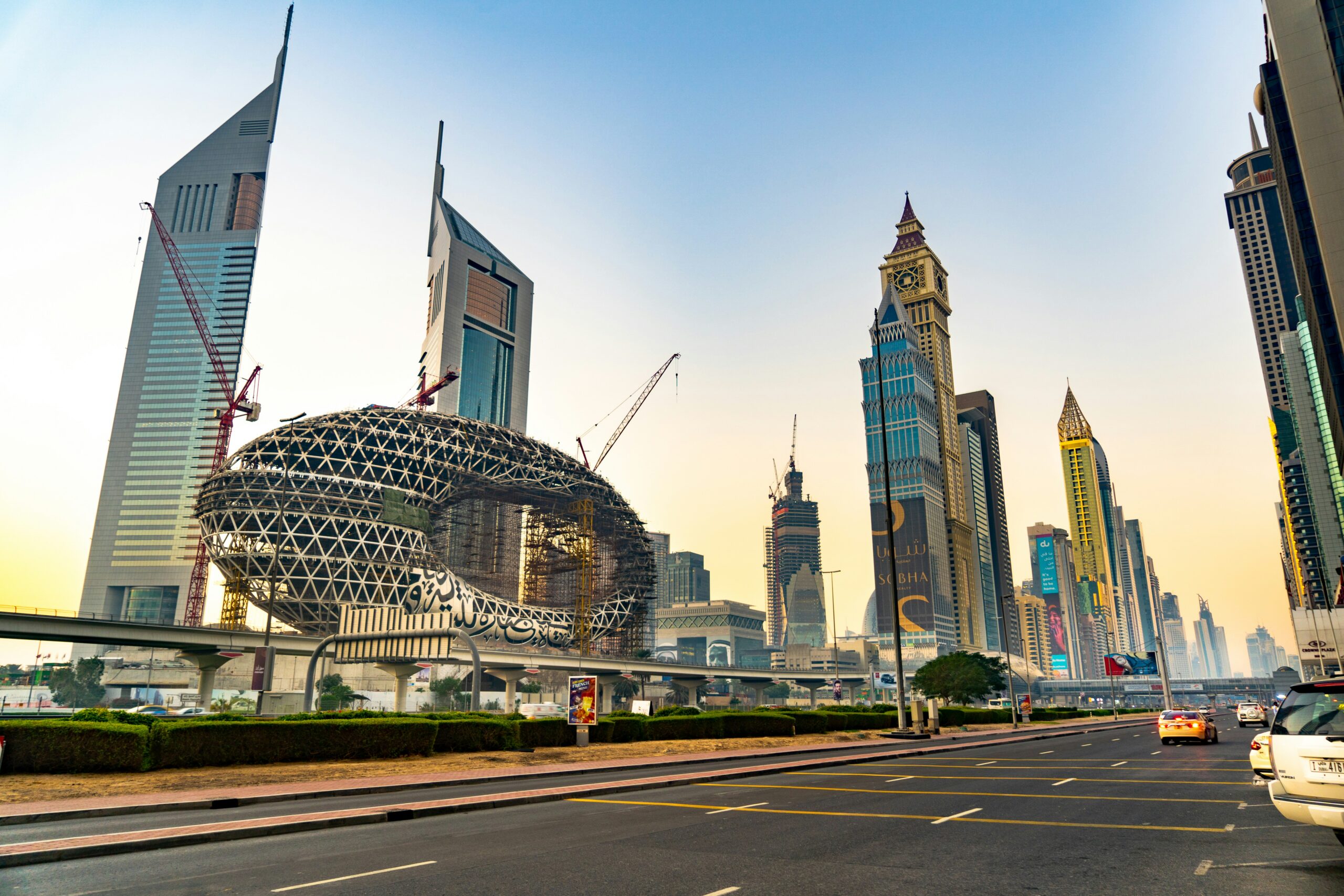
Living and working in the Gulf creates an unusually powerful window for wealth accumulation.
For many professionals in Dubai, Abu Dhabi, Riyadh and Doha, salaries can be materially higher than comparable roles back home. Combined with favourable local income tax treatment, employer benefits, housing allowances and dollar-pegged currencies, expats can often save at a pace that would be difficult to replicate back home.
But high income does not automatically translate into lasting wealth.
Many expats build portfolios that mirror their immediate surroundings. Cash sits in local accounts. Property purchases concentrate in Dubai. Investment decisions are shaped by what colleagues, friends and peers are doing. This can work for a period, especially in a rising property market. It can also leave families exposed to a single geography, a single property cycle, a single employment market and a single currency bloc.
The Gulf salary is the wealth creation engine. What happens next determines whether today’s income becomes tomorrow’s financial security.
A more disciplined approach is to use the wealth created to build a portfolio that continues to serve in the long term.
Employment in the Gulf can be highly rewarding, but it can also be less permanent than many expats assume.
Visas are often tied to employment. Residency can change quickly. Sectors slow down, packages get revised and family plans can shift. This makes liquidity and diversification especially important.
If a large share of investable assets is held in the same market, the same property cycle and the same currency bloc, a form of double exposure is created. Income, housing, lifestyle and investments are all tied to the same region at the same time. If conditions turn, the concentration becomes much more visible.
Owning several UAE properties may feel diversified, but if they all depend on the same rental market, supply cycle and investor sentiment, the underlying exposure is still concentrated.
This does not mean that Gulf property should be avoided. Dubai property has played a legitimate role in many expat wealth stories, and for some families it will remain a sensible allocation. The issue is not whether it can be attractive. The question is whether it has become too dominant.
Property also carries meaningful liquidity risk. Transaction costs, service charges, off-plan delivery risk, financing terms and exit timing all matter. A property that looks highly liquid in a rising market can become much harder to sell when sentiment weakens. Sophisticated expats tend to treat local property as one allocation within a wider portfolio, not as the whole plan.
Most Gulf professionals earn in currencies pegged to the US dollar. This can be a meaningful advantage. It gives expats exposure to the world’s dominant investment currency and aligns naturally with many global private market opportunities, particularly in private credit, real estate and alternative investment strategies.
However, income currency is only one side of the balance sheet. Future spending currency can matter more.
Many expats from the UK, Europe and other home markets retain meaningful home-currency liabilities. These may include a home purchase, university fees, parental support, retirement income or the cost of eventually returning home. If the portfolio is almost entirely held in dollar-linked assets while future spending will be in sterling, euros or another currency, exchange-rate risk can appear at precisely the wrong moment. The issue may not be visible while income is high and the family remains in the Gulf. It becomes visible when capital has to be used.
A portfolio should be built around where the money is likely to be spent. A British expat should usually build meaningful GBP exposure alongside USD investments. A family genuinely settled in the Gulf with no foreseeable return may reasonably maintain a larger USD allocation. For most internationally mobile families, the answer is a blend rather than a single currency.
Practical action: identify the currency of the largest future liabilities. This should include property, school or university fees, retirement income and family support. If the current portfolio does not match those liabilities, rebalancing should happen gradually rather than through one large currency move at the point the money is needed.
Many Gulf expats do not confront the retirement issue early enough. In much of the GCC, expats should not assume they will have access to a state pension equivalent. Some employers provide workplace savings arrangements, but many do not offer anything resembling a fully funded long-term pension scheme.
The local equivalent is often the end-of-service gratuity, but it should not be mistaken for a complete retirement plan. The gratuity is typically a one-time payment based on base salary and length of service. It can be useful, but it is not an ongoing income stream. This creates an important planning gap.
A high Gulf salary can produce a surprisingly modest retirement pot if surplus income is not invested deliberately.
Building a genuine retirement plan requires intentional action. This may include workplace savings schemes where available, regular investment into income-generating assets, exposure to long-term growth assets and a clear view of the currency in which retirement income will eventually be needed.
The Gulf window can be highly valuable, but it is time-limited. Each year of high earnings should be treated as a building block for future independence, not simply an opportunity to upgrade lifestyle.
Expat portfolios work best when built in layers.
Each layer has a different purpose, carries a different level of risk, and each should have a different time horizon. One of the most common mistakes Gulf-based investors make is treating all surplus income in the same way.
Layer 1: Liquidity
Accessible capital for expenses, emergencies, school fees, healthcare, travel and relocation risk. Employment changes in the Gulf can affect residency, housing and insurance quickly, so liquidity often matters more than investors initially assume. This is not investment capital. It should remain accessible.
Layer 2: Planned Expenditure Capital
Capital earmarked for known or likely commitments, such as a property purchase, school or university costs or a planned return home within the next few years. This money should not be invested like speculative growth capital. The spending date may be too close to absorb a major drawdown or illiquidity.
Layer 3: Income and Preservation Capital
This is where private credit, diversified income strategies and selected real asset investments may sit. The aim is to generate income while preserving capital. This layer should be built with careful attention to risk, diversification, security, manager quality and liquidity terms. The objective is not simply to chase the highest headline return. It is to create a more dependable pool of capital that can support long-term financial stability. For Muslim investors, this layer also needs to be built in a way that is sharia-compliant, with clear attention to structure, asset backing, use of proceeds and income generation.
Layer 4: Long-Term Growth Capital
Capital that can be invested for long-term appreciation. It may include sharia-compliant public equities, private equity, direct business investments or carefully selected property. This capital must be able to tolerate volatility, illiquidity and the possibility of loss. It should not include money needed for relocation, school fees or near-term retirement income.
The value of this framework is that it stops every surplus dirham from being treated the same. Relocation money should not be locked into private equity. School-fee money should not depend on a favourable currency move. Long-term growth capital should not be confused with emergency liquidity.
Practical action: assign each major savings pot or investment to one of the four layers. If almost everything sits in long-term growth assets with very little liquidity or income capital, the portfolio is more exposed than it appears.
One of the most significant advantages of investing from the Gulf is the local tax environment. For many eligible Gulf-based investors, investment income can be received without withholding tax being applied at source. Cur8 Capital does not apply withholding tax on investment returns, which allows income and growth to compound without that additional tax drag at source.
This matters. The difference between reinvesting a full return and reinvesting a return reduced by withholding or income tax can become significant over five to ten years. For investors based in the Gulf, this can be a major structural advantage when used correctly.
This does not mean tax can be ignored. Many expats remain connected to their home country through property, pensions, family assets, future inheritance planning or an intended return. The timing of a return, asset disposal and inheritance planning can all have consequences. Tax planning is most useful before assets are sold, investments are restructured, capital is moved or a return date is fixed.
A mature portfolio can use different markets for different functions. The key is to understand the role each asset class plays.
Public equities can provide liquid global growth exposure through sharia-compliant funds or ETFs. They are accessible and diversified, but can be volatile and are usually better suited to long-term growth capital rather than near-term commitments.
Private credit can sit within the income and preservation layer. In broad terms, it involves financing businesses, assets or specific transactions outside public credit markets. In a sharia-compliant context, it must be connected to real economic activity. Private credit can be attractive for investors seeking income, but it is not cash. It carries capital risk, liquidity risk, manager risk and exposure to underlying assets or counterparties.
Private equity and venture capital sit in the long-term growth layer. They can provide attractive upside but usually involve higher risk, longer duration and limited liquidity. They should not be used for capital needed for relocation, school fees or near-term home purchases.
Real estate can also remain part of the portfolio, but it should be sized deliberately. Local property should not be allowed to crowd out currency diversification, liquid investments, income strategies or non-GCC exposure.
Within this framework, Cur8’s USD Income Fund, now managing over $30m in assets under management, sits within the private credit and income allocation rather than the speculative growth allocation. It is designed for eligible investors seeking sharia-compliant USD-denominated private market income exposure. Its relevance for Gulf-based investors is partly currency alignment, but suitability depends on the investor’s wider circumstances, liquidity needs and risk appetite.
1. Identify future liabilities
Map expected spending over the next two, five and fifteen years. Include home purchases, school fees, university costs, retirement income and family support. The currency of those liabilities should influence the currency of the portfolio.
2. Strengthen liquidity first
Before allocating to private markets, ensure there is enough accessible capital for emergencies, relocation risk and near-term commitments. Gulf-based professionals often need a stronger liquidity buffer than they expect.
3. Close the retirement gap
Calculate the expected end-of-service gratuity and compare it with the retirement income the family wants. Any gap should be addressed through regular long-term investing rather than left until the end of the Gulf career.
4. Build currency exposure gradually
Where future liabilities are in GBP, EUR or another home currency, build that exposure over time. Avoid waiting until the exact point the money is needed.
5. Understand your tax position
Review whether investments are structured to benefit from the Gulf-based tax environment and whether any unnecessary withholding or home-country tax drag applies.
6. Allocate private markets deliberately
Private credit may suit part of the income layer. Private equity may suit part of the growth layer. Neither should replace liquidity or capital needed for near-term family commitments.
For Gulf-based professionals and business owners, the opportunity is significant.
Cur8 Capital works with eligible investors seeking sharia-compliant private market exposure across income, real assets and growth strategies. We currently manage c.$230m in sharia-compliant investments across private credit, real assets, private equity and income strategies. If you are a Gulf-based professional or business owner with £100,000 or $100,000 or more to deploy, we would welcome a conversation with our investment team.
Book a call with our investment team →
The aim is to build a portfolio that reflects where you are today, where your family is likely to be tomorrow, and what your wealth ultimately needs to achieve.
If you think someone you know will find this read useful, feel free to share this guide with them using the links below.